
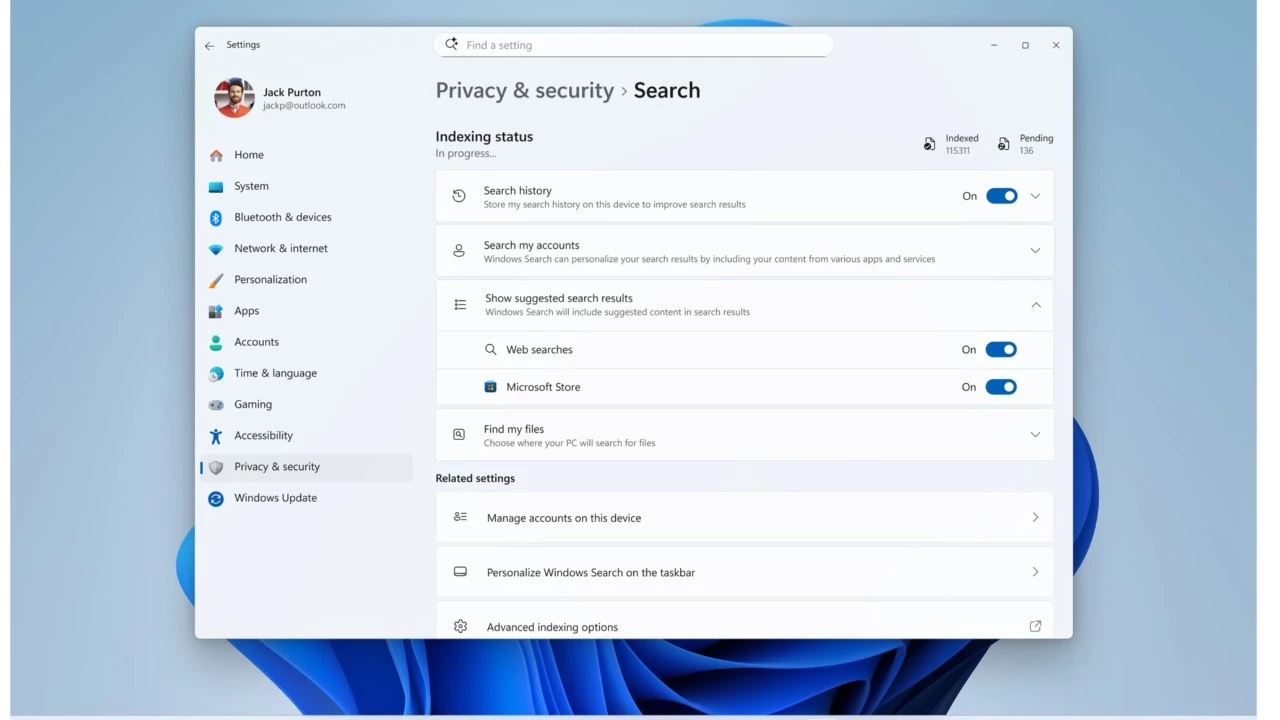
Microsoft has begun testing a comprehensive overhaul of the Windows 11 search functionality for participants in the Windows Insider program. The technology giant has completely redesigned both the interface and underlying algorithms, promising users a faster, clearer, and more useful search experience. This update addresses one of the most persistent complaints from Windows users: the cluttered search results that often prioritized advertisements and web suggestions over local files and applications.
The changes represent a significant shift in Microsoft’s approach to the search feature, which has been a contentious point among users since Windows 10 introduced Bing integration into the Start menu search. Many users have expressed frustration over the years about searching for local programs only to be presented with web results and promotional content. This update appears to acknowledge those concerns by prioritizing relevant local results and reducing the prominence of advertising elements.
What’s New in the Redesigned Search Experience
The updated search functionality brings several key improvements that Microsoft has been developing over the past year. The new interface features a cleaner, more streamlined design that reduces visual clutter and makes it easier for users to find what they’re looking for. Algorithm improvements mean that local files, applications, and system settings now appear more prominently in search results, with web suggestions taking a secondary role rather than competing for attention at the top of the results list.
Microsoft has also improved the speed of search indexing, meaning results appear faster as users type their queries. The company reports that the new search can return results up to 50 percent faster than the previous implementation in certain scenarios. Additionally, the search now better understands context and natural language queries, allowing users to find files and settings using more conversational search terms rather than exact file names or technical terminology.
A History of Search Controversies in Windows
The Windows search feature has undergone numerous transformations since its introduction. Windows XP featured a simple but effective search function, while Windows Vista attempted to revolutionize file searching with its desktop search capabilities. Windows 7 refined this approach, but Windows 10 marked a controversial turning point when Microsoft deeply integrated Bing web search into the Start menu. This decision drew criticism from users who felt the operating system was prioritizing Microsoft’s advertising revenue over user experience.
Over the years, Microsoft has faced backlash for various search-related decisions, including displaying advertisements for Microsoft Edge when users searched for competing browsers, and promoting Microsoft 365 subscriptions through search results. Power users developed workarounds and third-party tools to disable these features, while others simply avoided using the built-in search altogether in favor of alternative solutions like Everything Search or Listary.
Gradual Rollout and Future Availability
As with many Windows Insider features, the new search capabilities are being distributed gradually, meaning not all testers will have immediate access to the improvements. Microsoft typically uses this staged approach to gather feedback and identify potential issues before wider deployment. Users enrolled in the Windows Insider Dev or Beta channels may see the update appear over the coming weeks as Microsoft expands the testing pool.
The company has not announced a specific timeline for when these improvements will reach the general public through standard Windows 11 updates. Based on previous Insider-to-release patterns, users might expect to see these changes in a future Windows 11 feature update, potentially arriving in late 2025. Microsoft has indicated that user feedback from the Insider program will directly influence the final implementation, suggesting the company is genuinely interested in getting this update right before broad deployment.
Expert Opinion: This search overhaul signals Microsoft’s recognition that user experience must take precedence over advertising integration in core operating system functions. If successfully implemented, this could mark a turning point in how Microsoft balances monetization with usability. Industry observers should watch whether this philosophy extends to other Windows features, potentially indicating a broader strategic shift toward user-centric design in future Windows releases.