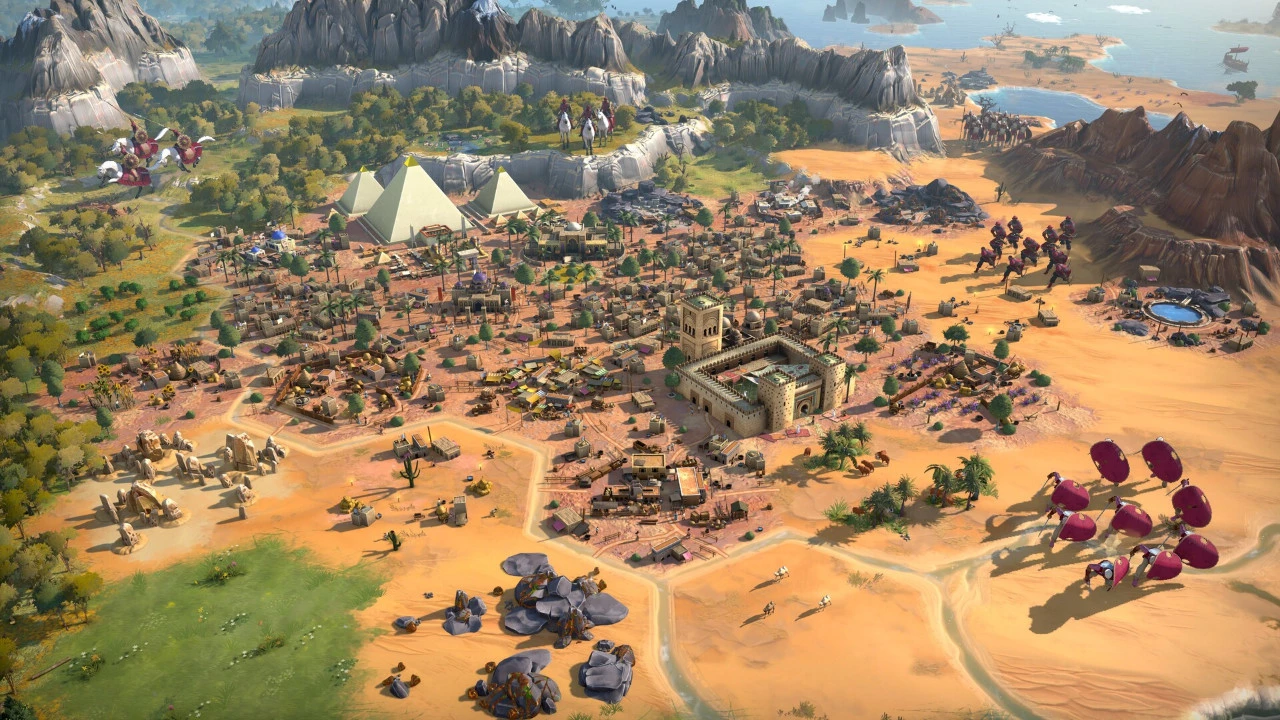
French game development studio Amplitude has officially unveiled Humankind 2, the highly anticipated sequel to their civilization-building 4X strategy game. The announcement, which set the gaming community abuzz with excitement, was unfortunately overshadowed by a wave of criticism from players who mistakenly accused the developers of using AI-generated artwork in the reveal trailer. The sequel is currently scheduled for release in 2027, giving the studio ample time to develop what they promise will be an ambitious follow-up to the original title.
The controversy erupted almost immediately after the announcement trailer went live, with vocal critics on social media platforms claiming that certain visual elements appeared to be generated by artificial intelligence. This accusation has become increasingly common in the gaming industry as AI art tools have proliferated over the past two years, creating a climate of suspicion around any stylized or unconventional artwork. However, in this case, the accusations appear to have been entirely unfounded, with the studio and industry observers confirming that the artwork was created through traditional means by human artists.
The Original Humankind and Its Legacy
The original Humankind launched in August 2021 as Amplitude Studios’ ambitious attempt to compete with the legendary Civilization franchise. Published by Sega, the game distinguished itself through its unique culture-switching mechanic, which allowed players to evolve their civilization by adopting different historical cultures throughout the ages. This innovative approach meant that a player could begin as the Egyptians, transition to the Greeks in the classical era, and eventually become the British Empire in modern times, creating a unique hybrid civilization with combined bonuses and characteristics.
While Humankind received generally positive reviews upon release, with critics praising its fresh take on the genre and stunning visual presentation, the game faced criticism for certain gameplay balance issues and a less compelling late-game experience compared to its main competitor. Despite these shortcomings, the title sold well enough to justify a sequel, and Amplitude has been actively supporting the game with patches, updates, and downloadable content since launch. The studio has built a reputation for listening to community feedback, which suggests that Humankind 2 may address many of the original’s perceived weaknesses.
The AI Art Controversy in Gaming
The knee-jerk reaction accusing Amplitude of using AI-generated art reflects a broader tension within the gaming industry and creative communities at large. Since the emergence of powerful image-generation tools like Midjourney, DALL-E, and Stable Diffusion in 2022, artists and consumers have become increasingly vigilant about detecting AI-created content. While this vigilance serves an important purpose in protecting human artists’ livelihoods and maintaining transparency, it has also led to numerous false accusations against legitimate artwork that simply has an unusual style or aesthetic.
Several game studios have faced similar controversies in recent months, with some accusations proving accurate while others turned out to be baseless. The situation highlights the difficulty of distinguishing between AI-generated and human-created art, especially when artists deliberately employ stylized approaches. For Amplitude, a studio known for its distinctive visual identity and commitment to quality art direction, the accusations likely felt particularly unjust. The incident serves as a reminder that while healthy skepticism about AI use in creative industries is warranted, accusations should be backed by evidence rather than assumption.
What to Expect from Humankind 2
Although specific details about Humankind 2 remain scarce following the announcement, industry analysts expect the sequel to build upon the foundation established by its predecessor while introducing significant new features and improvements. The 2027 release window suggests that Amplitude is taking their time to deliver a polished product, learning from the somewhat rocky launch of the original game. Given the competitive landscape of the 4X strategy genre, which includes not only the Civilization series but also titles like Old World and upcoming competitors, the studio will need to innovate significantly to capture market attention.
The lengthy development timeline also provides Amplitude with the opportunity to incorporate emerging technologies and respond to player feedback in meaningful ways. As the gaming industry continues to evolve with new hardware capabilities and player expectations, Humankind 2 has the potential to set new standards for the genre. Fans of the original game remain cautiously optimistic, hoping that the sequel will fulfill the ambitious promise of its predecessor while delivering a more refined and engaging experience across all stages of gameplay.
Expert Opinion: The AI art controversy surrounding Humankind 2’s announcement reflects an industry at a crossroads, where legitimate concerns about artificial intelligence in creative work are sometimes manifesting as unfounded witch hunts. For Amplitude, the challenge will be not only developing a worthy sequel but also navigating an increasingly skeptical gaming community. The 2027 release date positions the game to potentially leverage next-generation console capabilities, which could give it a significant technological advantage over current competitors in the 4X space.