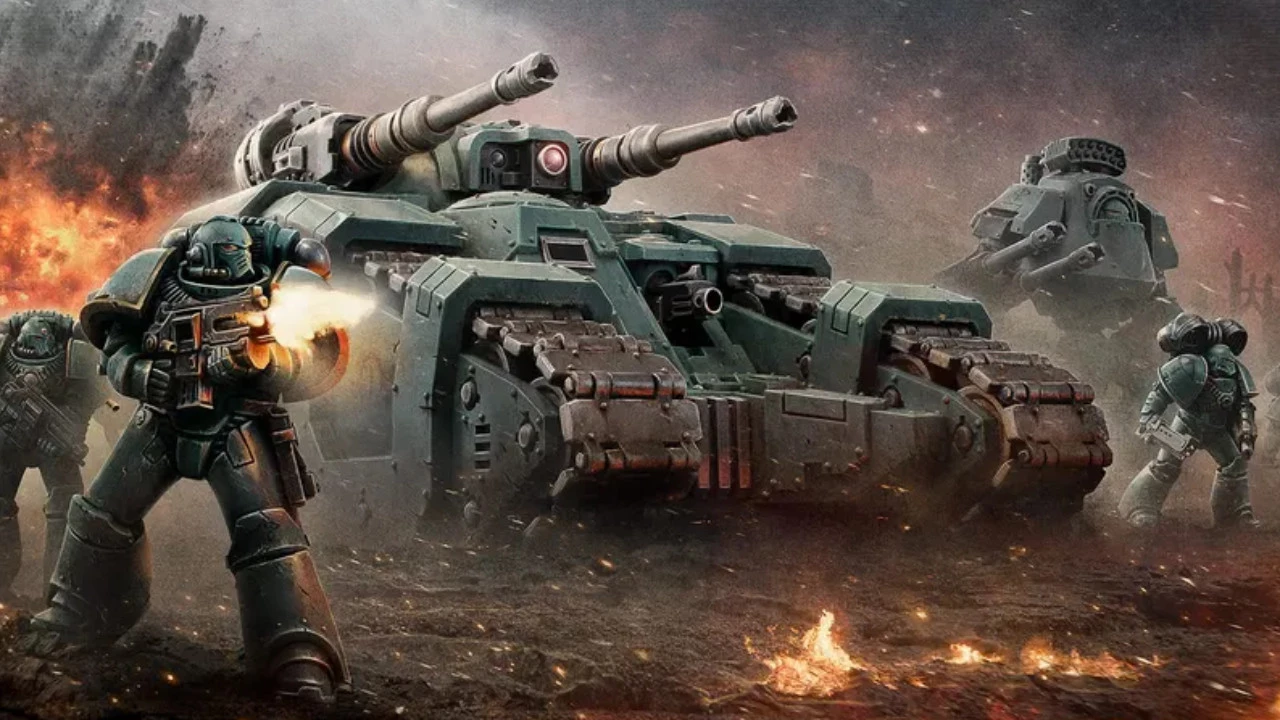
Games Workshop, the renowned British tabletop gaming company behind the iconic Warhammer franchise, found itself at the center of a peculiar controversy after eagle-eyed fans of Warhammer 40,000 spotted an anatomical anomaly on the cover artwork for the new expansion “Warhammer 40,000: 500 Worlds.” One of the Space Marines depicted on the cover art appeared to have six fingers on one hand, immediately sparking widespread speculation across social media platforms and gaming forums about whether the company had secretly begun using artificial intelligence to generate its artwork.
The discovery sent ripples through the passionate Warhammer community, which has long celebrated the franchise’s meticulously crafted artwork and miniatures. In an era where AI-generated images have become increasingly prevalent and controversial, the six-fingered Space Marine became a lightning rod for broader debates about authenticity and artistic integrity in the gaming industry. Games Workshop, known for its premium products and high production values, was suddenly facing uncomfortable questions about its creative processes.
The Investigation and Official Response
Responding swiftly to the mounting speculation, Games Workshop launched an internal investigation to determine the origin of the anatomical error. The company’s findings revealed that the mistake was, in fact, the result of human error by one of their traditional artists rather than any AI involvement. This conclusion came as a relief to many fans who had feared the company might be cutting corners by employing artificial intelligence tools for their iconic artwork. Games Workshop has built its reputation over four decades on the strength of its hand-crafted miniatures and original artwork, making any deviation from this tradition particularly significant to its devoted fanbase.
The incident highlights the current climate of suspicion surrounding digital artwork in the creative industries. AI image generators, while impressive in their capabilities, are notorious for struggling with anatomical details, particularly human hands and fingers. This technical limitation has become something of a telltale sign for identifying AI-generated content, leading many to immediately assume the worst when they spotted the extra digit on the Space Marine’s gauntlet. The fact that a human artist made this exact mistake serves as an ironic reminder that such errors have existed throughout art history, long before artificial intelligence entered the picture.
The Broader Context of AI in Gaming Art
This controversy arrives at a particularly sensitive time for the gaming and entertainment industries, where the use of AI-generated content has become a hotly debated topic. Several companies have faced significant backlash after being caught using AI artwork, often without disclosure. The practice has raised concerns about job displacement for professional artists, copyright issues, and the overall quality and authenticity of creative works. Games Workshop, with its premium pricing and devoted collector community, would have particularly much to lose from any perception that it was compromising on artistic quality.
Warhammer 40,000, first released in 1987, has grown from a niche tabletop wargame into a multimedia empire encompassing video games, novels, animated series, and soon a live-action adaptation from Amazon Studios. The franchise’s dark, gothic science fiction aesthetic has been developed over nearly four decades by generations of artists and designers, creating a visual language that fans consider sacred. The company’s art department employs numerous talented illustrators who bring the grimdark universe to life, and their work is considered an integral part of the Warhammer experience, not merely marketing material.
Fan Reaction and Industry Implications
The fan community’s response to Games Workshop’s clarification was largely positive, with many expressing relief and even amusement at the situation. The incident has sparked broader conversations about the need for careful scrutiny in an age of AI proliferation, while also demonstrating how quickly assumptions can spread in online communities. Some fans have jokingly suggested that six-fingered Space Marines could become an unofficial chapter or mutation within the game’s lore, turning the embarrassing error into a potential Easter egg for future releases.
Moving forward, this episode may prompt gaming companies to be more proactive in communicating about their creative processes. As AI tools become more sophisticated and harder to detect, establishing clear policies about human-created artwork could become a competitive advantage for companies like Games Workshop that pride themselves on craftsmanship. The incident also serves as a valuable reminder that human artists, despite their skill and experience, are not immune to making mistakes — and that such errors have been part of artistic tradition since the Renaissance, when even masters like Raphael occasionally miscounted fingers in complex compositions.
Expert Opinion: This incident represents a fascinating inflection point in the relationship between gaming communities and AI technology. As detection methods for AI-generated content improve, we may see more false positives where human errors are mistakenly attributed to artificial intelligence. Companies that maintain transparent communication about their creative processes and continue investing in human talent will likely build stronger trust with their audiences, ultimately turning anti-AI sentiment into a brand differentiator in the premium gaming market.