
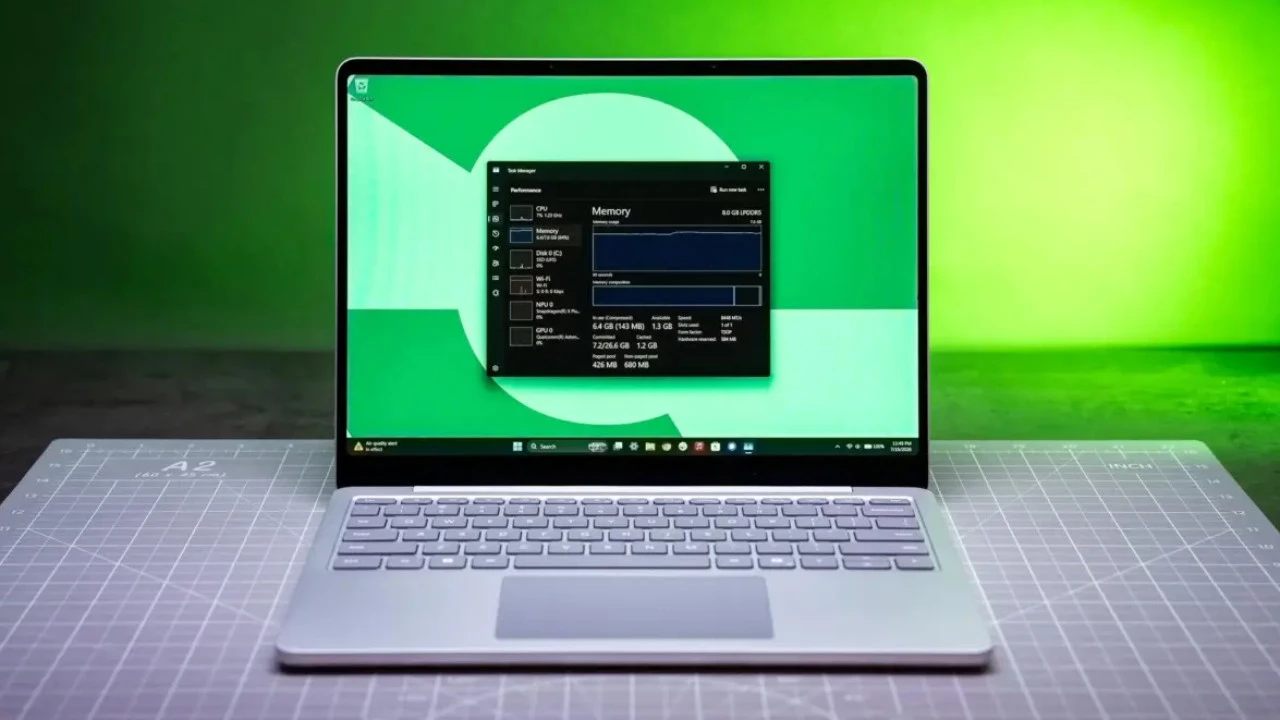
A recent evaluation by The Verge has exposed significant performance issues with Microsoft’s latest “affordable” configuration of the 13-inch Surface Laptop, powered by Qualcomm’s Snapdragon X Plus processor. The budget-friendly model, priced at $950, comes equipped with just 8GB of RAM — a specification that appears woefully inadequate for modern computing demands, even for the most basic everyday tasks.
The testing revealed that this entry-level Surface Laptop configuration experiences noticeable lag, freezing, and general unresponsiveness when users attempt to perform routine operations such as web browsing with multiple tabs, light document editing, or running basic productivity applications. These findings raise serious questions about Microsoft’s decision to offer such limited memory in a nearly thousand-dollar device in 2024.
The 8GB RAM Problem in Modern Computing
The issue of insufficient RAM has become increasingly prominent in recent years as operating systems, web browsers, and applications have grown more memory-hungry. Windows 11, which powers the Surface Laptop, is known for consuming a significant portion of available RAM just to run the operating system itself. When combined with modern web browsers like Chrome or Edge — notorious for their memory consumption — 8GB quickly becomes a bottleneck rather than a baseline.
Industry experts have long argued that 16GB should be considered the minimum standard for any modern laptop, especially those marketed toward productivity users. The problem is particularly acute for ARM-based systems like those running Qualcomm chips, as some applications must run through emulation layers that add additional overhead to system resources. This architectural consideration makes the 8GB limitation even more problematic for the Snapdragon X Plus-powered Surface Laptop.
Microsoft’s ARM Transition and Market Positioning
Microsoft has been aggressively pushing its partnership with Qualcomm as part of the broader Windows on ARM initiative, positioning these devices as competitors to Apple’s remarkably efficient M-series MacBooks. The Snapdragon X Plus and X Elite processors were specifically developed to challenge Apple’s dominance in the ARM-based laptop market, promising improved battery life and competitive performance. However, the decision to pair these new processors with minimal RAM configurations appears to undermine the entire value proposition.
The Surface Laptop line has historically represented Microsoft’s vision for premium Windows computing, serving as a showcase for what the Windows experience can be at its best. By offering an entry-level model that struggles with basic tasks, Microsoft risks damaging both the Surface brand reputation and the broader perception of Windows on ARM devices. Consumers who purchase this configuration expecting smooth performance may be left with a negative impression of ARM-based Windows computers altogether.
Implications for Consumers and the Industry
For potential buyers, the testing results serve as a crucial warning about the importance of examining specifications beyond just processor names and price points. While $950 might seem reasonable for a Surface-branded laptop, the compromised experience resulting from inadequate RAM transforms what should be a capable machine into a frustrating daily driver. Consumers would be better served either spending more for a 16GB configuration or exploring alternative options from competitors.
This situation also highlights a troubling trend in the laptop industry where manufacturers continue to offer memory configurations that were barely adequate years ago, despite the ever-increasing demands of modern software. As cloud-based applications, video conferencing, and browser-based tools become central to daily workflows, the gap between minimum acceptable specifications and what manufacturers offer at entry-level price points continues to widen, leaving budget-conscious consumers caught in the middle.
Expert Opinion: The Surface Laptop’s performance issues at 8GB RAM configuration signal a broader industry reckoning with minimum viable specifications. As AI features and increasingly complex web applications become standard, we can expect 16GB to become the baseline requirement within the next 12-18 months. Microsoft’s decision to ship a $950 device with such limitations suggests concerning priorities around profit margins over user experience, potentially slowing Windows on ARM adoption at a critical moment in its development.