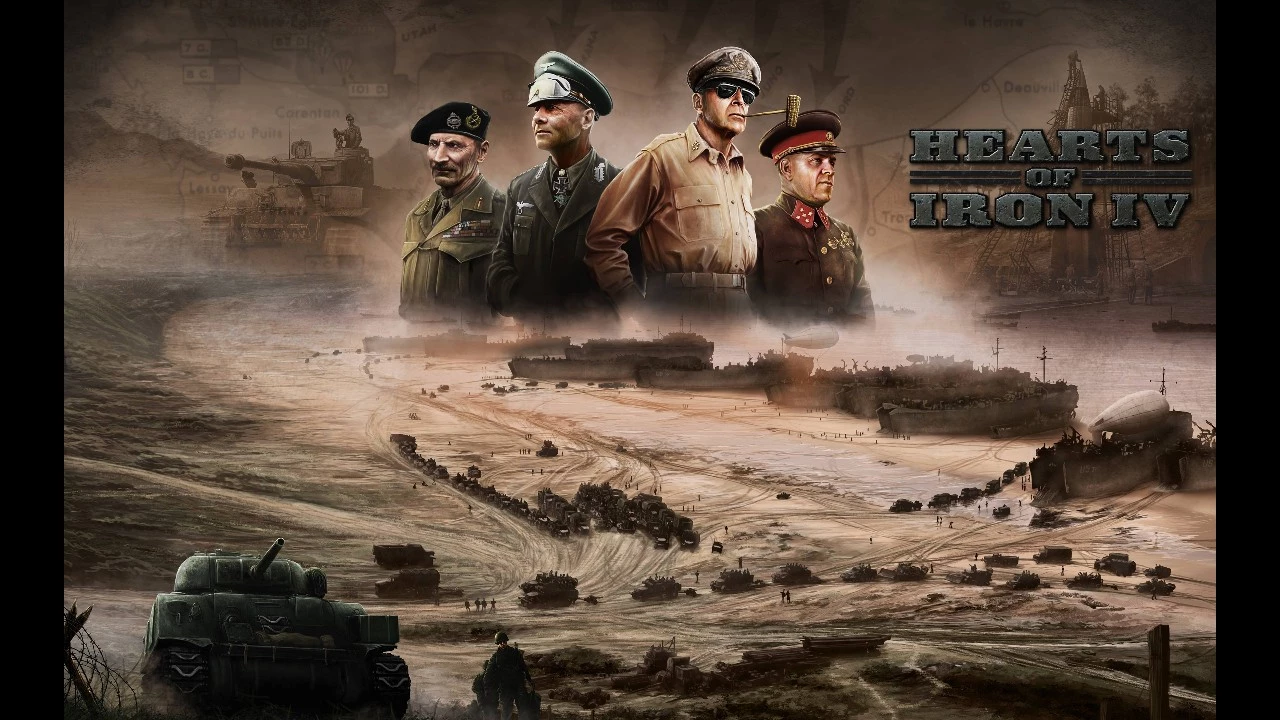
Paradox Interactive has once again reached out to the Hearts of Iron IV community seeking feedback about the future direction of their beloved World War II grand strategy game. In a recent developer diary, game designer Zwirbaum invited players to discuss one of the game’s most fundamental mechanics — the military production system — strongly hinting that significant changes could be on the horizon. This marks another step in Paradox’s ongoing commitment to evolving the nearly decade-old title through community-driven development.
The announcement has sparked intense discussion across gaming forums and social media platforms, with veterans of the strategy genre weighing in on potential improvements. Hearts of Iron IV, released in June 2016, has maintained a dedicated player base through continuous updates and expansions, but the core production mechanics have remained largely unchanged since launch. Many players have long argued that the system, while functional, could benefit from modernization to better reflect the complexities of wartime industrial mobilization.
Understanding the Current Production System
The existing military production system in Hearts of Iron IV operates on a relatively straightforward principle: players assign factories to production lines, and these facilities gradually manufacture equipment ranging from infantry weapons to battleships. Production efficiency increases over time as factories “learn” to produce specific equipment more effectively, creating strategic decisions about when to switch production or maintain existing lines. This system has served as the backbone of the game’s economic simulation for eight years.
However, critics argue that the current implementation oversimplifies the massive logistical challenges that characterized World War II industrial output. Historical records show that nations like the United States, Soviet Union, and Nazi Germany employed vastly different approaches to military production, from American mass-production techniques pioneered by automotive manufacturers to Soviet emphasis on simplicity and volume. The game’s uniform approach to production fails to capture these nuanced differences, potentially limiting strategic depth and historical authenticity.
Community Response and Potential Directions
The community response to Zwirbaum’s developer diary has been overwhelmingly enthusiastic, with players proposing numerous potential improvements. Suggestions range from implementing resource bottlenecks and supply chain management to introducing worker allocation systems and factory specialization mechanics. Some players have pointed to modifications like “Total War” and “Black Ice” as examples of how production systems could be expanded to offer greater complexity and historical accuracy.
Paradox Interactive has built its reputation on listening to community feedback, a practice that has shaped the development of titles across their portfolio, including Crusader Kings III and Europa Universalis IV. The company’s approach to post-launch support typically involves regular free updates alongside paid expansions, allowing games to evolve significantly over their lifespans. Hearts of Iron IV has already received numerous major expansions including “No Step Back,” “By Blood Alone,” and “Arms Against Tyranny,” each adding new national focus trees and gameplay mechanics.
Historical Context and Design Challenges
Redesigning the production system presents significant challenges for the development team. Any changes must balance historical accuracy with gameplay enjoyment, ensuring that new mechanics enhance rather than frustrate the player experience. World War II saw unprecedented industrial mobilization, with nations converting peacetime factories to military production virtually overnight. The United States alone produced over 300,000 aircraft and 100,000 tanks during the conflict, a feat that fundamentally altered global industrial capacity.
Game design experts note that strategy games face inherent tension between simulation depth and accessibility. While hardcore players often demand greater complexity, overly intricate systems can alienate casual audiences and create tedious micromanagement. Paradox must carefully consider how any production overhaul affects game pacing, AI behavior, and multiplayer balance. The studio has previously demonstrated willingness to make substantial mechanical changes, having completely redesigned supply and logistics systems in the “No Step Back” expansion released in 2021.
As Hearts of Iron IV approaches its ninth year of active development, this potential production overhaul represents Paradox’s continued commitment to improving and expanding their flagship World War II strategy title. Whether these discussions lead to minor adjustments or a fundamental reimagining of military production remains to be seen, but the community’s engaged response suggests strong appetite for meaningful change.
Expert Opinion: The timing of this community consultation suggests Paradox is likely planning a major expansion or free update focused on economic and industrial mechanics, possibly arriving in late 2025 or early 2026. Given the studio’s track record, any production system overhaul will likely introduce modular complexity — allowing players to choose their preferred level of detail while maintaining backward compatibility with existing save games and popular mods.