Social Deduction Games Explained: Among Us and the Games It Inspired
From Mafia and Werewolf to Among Us: how social deduction games work, why Among Us exploded in 2020, and how to host fair, fun lobbies with friends.
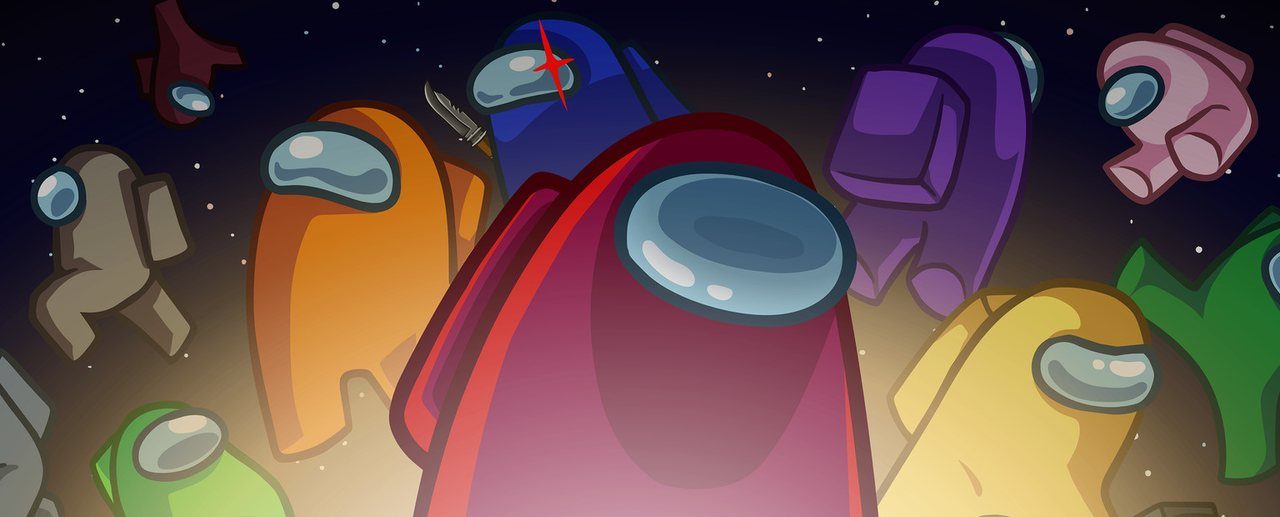
Some party games test your reflexes. Social deduction games test whether you can keep a straight face. A few players are secretly working against the group, everyone else has to figure out who, and the real game happens in the arguments, alibis and accusations between rounds. Among Us turned this old parlor-game idea into one of the most played video games of 2020, and it is still the reference point for the genre. This guide explains where social deduction came from, how Among Us works, and how to run a lobby that stays fun for everyone.
What Social Deduction Means
A social deduction game has three ingredients:
- Hidden roles. At the start, players are secretly assigned to teams, usually a large “innocent” majority and a small hidden minority.
- Asymmetric information. The minority knows who its members are; the majority does not.
- Discussion and voting. The majority’s main weapon is conversation. Players share what they saw, question each other, and vote to remove suspects.
The tension comes from the mismatch. The hidden team must act without being noticed, then lie convincingly when questioned. The majority has numbers but limited evidence, so it often votes out its own members by mistake. Every round produces a story, which is why these games are so watchable and so good for groups of friends.
Roots: Mafia and Werewolf
The genre predates video games. Mafia is generally credited to Dmitry Davidoff, who created it in the mid-1980s in the Soviet Union, where it spread through schools and universities. The game alternates between a “night” phase, when the secret mafia chooses a victim, and a “day” phase, when the town discusses and votes to eliminate a suspect. A moderator runs the game and announces results.

In 1997, Andrew Plotkin introduced a werewolf theme that replaced mafiosi with werewolves and villagers. Commercial card versions followed, and the format became a staple of game nights, conventions and online forums, where people played “forum Mafia” over days or weeks.
These games established the basic rhythm that Among Us inherited: hidden action, then public debate, then a vote. What video games added was a world to move around in, giving players something to do between debates and a source of evidence beyond pure talk.
How Among Us Works
Among Us is developed and published by Innersloth, a small American studio. It released on Android and iOS on June 15, 2018 and on PC via Steam on November 16, 2018. A Nintendo Switch version followed on December 15, 2020, and PlayStation and Xbox versions launched on December 14, 2021.
Crewmates and Impostors
Each match takes place on a spaceship or base. Most players are Crewmates; one to three are Impostors, depending on the host’s settings and lobby size. Lobbies hold between 4 and 15 players, the upper limit having been raised to 15 in a June 2021 update.
- Crewmates win by completing all their tasks, small minigames scattered around the map such as fixing wiring or swiping a card, or by voting out every Impostor.
- Impostors win by eliminating Crewmates until they equal the number of remaining crew, or by letting a sabotage run out of time. They can fake tasks, travel through vents and trigger sabotages such as turning off the lights or starting a reactor meltdown.
Meetings and voting
When someone finds a body, they can report it, or any player can press the emergency button a limited number of times. Both open a meeting: a timed chat or voice discussion in which everyone can present evidence and accuse others. Players then vote. Whoever receives the most votes is ejected; a tie or a majority skip means no one leaves. Eliminated players become ghosts who can still finish tasks (if they were crew) but cannot talk to the living.
Maps and roles
The game has added maps over time: The Skeld (the original), MIRA HQ and Polus in 2019, The Airship in 2021 and The Fungle in 2023. In November 2021 Innersloth introduced optional roles, including the Engineer (who can use vents as a Crewmate), the Scientist (who can check vitals remotely), the Guardian Angel (a ghost who can protect the living) and the Shapeshifter (an Impostor who can disguise as another player). More roles have been added in later updates, and hosts can turn each one on or off. A separate Hide n Seek mode, released in December 2022, swaps discussion for a straight chase with a revealed Impostor.
Why Among Us Exploded in 2020
For its first two years, Among Us had a modest audience. In mid-2020 that changed sharply. Popular Twitch streamers and YouTubers picked it up during a period when many people were stuck at home during the COVID-19 pandemic, and its concurrent player numbers climbed into the millions by September 2020. By that month it had passed 100 million downloads.

Several factors made it a perfect fit for the moment:
- Low barrier to entry. It ran on phones and modest PCs, and was free on mobile.
- Crossplay. Friends on phones and computers could join the same lobby with a room code.
- Built for talking. It worked as a social activity when people could not meet in person.
- Great for spectators. Viewers watching a streamer know who the Impostor is, which makes every meeting a piece of dramatic irony.
The game won Best Multiplayer Game and Best Mobile Game at The Game Awards 2020. In October 2020 it even crossed into politics, when U.S. Representatives Alexandria Ocasio-Cortez and Ilhan Omar played it on a Twitch stream encouraging people to vote.
Other Video Game Takes on the Format
Among Us did not invent digital social deduction, and many games have since explored the idea in different ways.
Goose Goose Duck
Gaggle Studios’ Goose Goose Duck launched on Steam in 2021 as a free-to-play game supporting up to 16 players. It follows a similar loop of tasks, bodies and meetings, but leans heavily on proximity voice chat and a large cast of special roles, which makes each match more chaotic and less predictable.
Among Us VR and 3D
Among Us VR, co-developed by Schell Games with Innersloth and Robot Teddy, released on November 10, 2022 for Meta Quest 2 and PC VR via Steam. It moves the game into first person, so you physically walk the halls, perform tasks with your hands and read body language in meetings. In 2025 it was rebranded as Among Us 3D, with a non-VR version added on Steam.
Text- and card-driven designs
Other digital adaptations stay closer to the original Mafia formula, with discussion-only phases and many special roles. Digital versions of Werewolf-style card games also exist, often supporting a phone-based moderator so no one has to sit out of the game.
When choosing, check whether the game supports proximity chat (which can be hilarious but harder to moderate), how many players it needs to be fun, and whether it offers private lobbies with room codes.
Hosting a Fair and Fun Lobby
Social deduction is only as good as the room. A few host decisions make an enormous difference.
Choose settings for your group size
- Impostor count: with fewer than about seven players, one Impostor usually feels fairest. Larger lobbies can support two or three.
- Discussion and voting time: new groups need longer discussion. Experienced groups often shorten it to keep momentum.
- Kill cooldown and vision: longer cooldowns and wider crew vision favor Crewmates, which helps beginners feel less helpless.
- Confirm ejects: turning this on reveals whether the ejected player was an Impostor, which is easier for newcomers to follow.
Agree on house rules before starting
- No ghosting: players who are eliminated should not tell living friends what they saw, whether over a separate voice call or in the same room. This is the single most common way games get ruined.
- Voice or text: decide whether meetings use voice chat and whether talking is allowed outside meetings.
- Respectful accusations: lying is part of the game, but personal insults are not. A brief reminder before the first round keeps things friendly.
- No “teaming”: players should not form secret alliances based on real-life friendships.
Keep new players engaged
Being voted out early can be boring, especially for someone new. Ghosts can still help their team in Among Us by finishing tasks, so remind new players of that. Rotate who hosts and explains the settings, and keep matches short at first so no one sits out too long. If you are organizing an in-person night, our guide to planning a video game party night has advice on seating, screens and rotating players. For groups where some people do not own the game, phone-based alternatives like those described in our Jackbox explainer include their own hidden-role games.
Strategy Basics for Both Sides
As a Crewmate
- Stay near others when possible; witnesses protect you.
- Remember where you saw people and when. Short, specific statements carry more weight in meetings than long speeches.
- Watch for “visual tasks” (tasks that show an animation when completed), which can clear a player you saw doing one, if the host has left them enabled.
- Do not vote on a hunch alone. Skipping a vote is often better than ejecting a crewmate.
As an Impostor
- Act like a Crewmate: follow plausible routes and stand at tasks for a believable length of time.
- Use sabotages to split the group or pull players away from a body.
- In meetings, be calm and consistent. Over-explaining is a classic giveaway.
- Avoid accusing aggressively without evidence; it draws attention to you.
Why the Genre Endures
The appeal of social deduction is that the most important skill is reading people, not mastering controls. That makes it one of the few multiplayer formats where a newcomer can beat a veteran, and it produces memorable moments every round. Among Us captured that perfectly with simple rules, crossplay and short matches, and the games it inspired continue to experiment with roles, voice chat and even virtual reality.