VR Fitness Basics: Getting Active With Rhythm and Workout Games Safely
Why VR games can get you moving, the main types of active VR games, and practical habits for space, hygiene, warm-ups and pacing.

Plenty of people buy a VR headset for games and discover, a few weeks later, that they are sweating more than they expected. Swinging sabers, dodging walls and throwing punches at targets are real physical movements, and a well-designed game can make twenty minutes pass without the feeling of a workout. That is the appeal of VR fitness. This guide explains why VR games can be physically active, which kinds of games tend to get people moving, and how to do it safely and comfortably. It is general information, not medical advice: if you have a health condition, an injury or any doubts, consult a doctor or another qualified professional before starting a new exercise routine.
Why VR Games Can Be Physically Active
Most video games are played with thumbs. VR games are played with your body. Modern headsets track your head and both hands in 3D space, so the game can ask you to reach, crouch, twist, step and swing, and judge how well you do it. Three factors make this particularly effective for getting active:
- Full-body input. Movements that would be a button press in a regular game, like dodging or blocking, become actual movement.
- Immersion and distraction. When your attention is on music, targets and patterns, the effort can feel less noticeable than staring at a gym wall.
- Game structure. Scores, levels, streaks and unlocks provide the kind of short-term goals that help people stick with a habit.
The intensity varies enormously. A relaxed song on an easy difficulty is light activity; a fast song on an expert difficulty can be genuinely demanding. That range is helpful, because it means you can start gently and build up.
Types of Active VR Games
Rhythm games
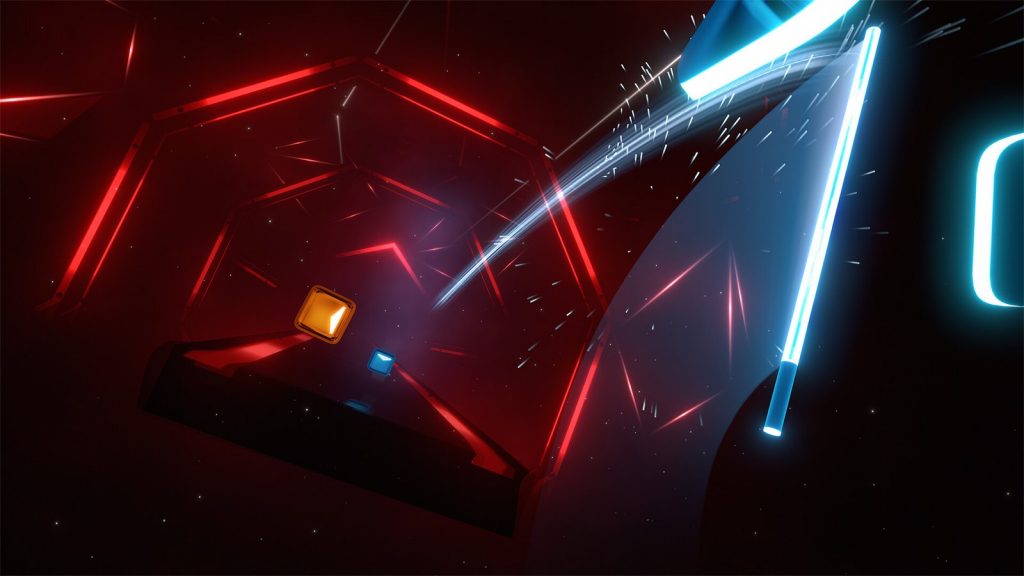
Rhythm games are the most popular entry point. You hit, slice or follow objects in time with music, and higher difficulties ask for faster and larger movements. Beat Saber is the best-known example; our Beat Saber beginner’s guide explains its modes and scoring. Other rhythm games use different motions, such as following flowing rails with your hands, or combining rhythm with dodging and aiming. Rhythm games were not designed primarily as workouts, but they are often the most fun way to get moving.
Boxing-style and combat workouts
Dedicated fitness apps such as FitXR and Les Mills Bodycombat use punches, blocks and squats in time with music, often led by a virtual coach or class structure. These are designed as workouts from the start, with warm-ups, intervals and cool-downs built in. They tend to be more structured than games, which suits people who want a routine.
Coached fitness services
Subscription services offer daily workouts with real coaches. The best-known example, Supernatural, had an eventful 2026: Meta announced in January that it would stop receiving new content, and in June the original founders and coaches announced a new independent company, Supernatural Health, with plans to relaunch on Quest later in the year. The Meta-operated version was set to remain available through December 3, 2026. If you are considering a subscription service, check its current status on the official store page first.
Dance games
Dance games ask you to follow choreography with your arms and upper body, and sometimes your whole body. Harmonix brought its Dance Central series to VR in 2019. Dance games are a lighter, more playful option and work well for people who find punching or slicing too aggressive.
Active games that are not about fitness
Many games get you moving without trying to be workouts: arm-swinging locomotion games, physics sandboxes and sports-themed party games. They can be a good bridge for people who find the word “workout” off-putting.
Setting Up Your Space
Active VR needs more room than calm VR. Your arms will extend fully in every direction, and in a fast song you may step or lunge without noticing.
- Clear more than you think. Remove furniture, plants and anything fragile from the area. Check the ceiling for fans and low lights, since overhead punches and raised hands can hit them.
- Set the boundary carefully. Draw your boundary a little inside the real clear space, so you have a buffer when the warning appears.
- Use wrist straps. Sweaty hands and fast swings are a recipe for flying controllers.
- Mind the floor. A non-slip surface matters. Socks on hardwood are slippery; a thin mat or rug can help you stay grounded and can also tell you, by feel, when you have drifted from the center.
- Airflow helps. A fan pointed at your play space keeps you cooler and can help you stay oriented, as you can sense where the airflow is coming from.
- Keep pets and people out. Make sure children and pets know not to approach while you play.
Hygiene and Sweat
Sweat is the practical challenge most new VR exercisers do not expect. The default face interface on many headsets is made of foam, which absorbs moisture and is hard to clean.
- Use a wipeable face cover. Silicone covers or replacement interfaces made of leatherette-style material can be wiped down after each session.
- Consider a headband. A thin sweatband under the headset keeps sweat away from the lenses and face pad.
- Do not wipe the lenses with damp cloths or cleaning fluids. Headset makers recommend a dry microfiber cloth for lenses. Clean the face interface separately according to the manufacturer’s instructions.
- Let it air out. After a session, leave the headset somewhere cool and shaded to dry, but never in direct sunlight, which can damage displays through the lenses.
- Share carefully. If several people use the same headset for workouts, give each their own cover or clean it between users.
Warm-Up, Pacing and Recovery
Treat VR exercise like any other physical activity. The following are widely accepted general habits, not a training program.
Warm up
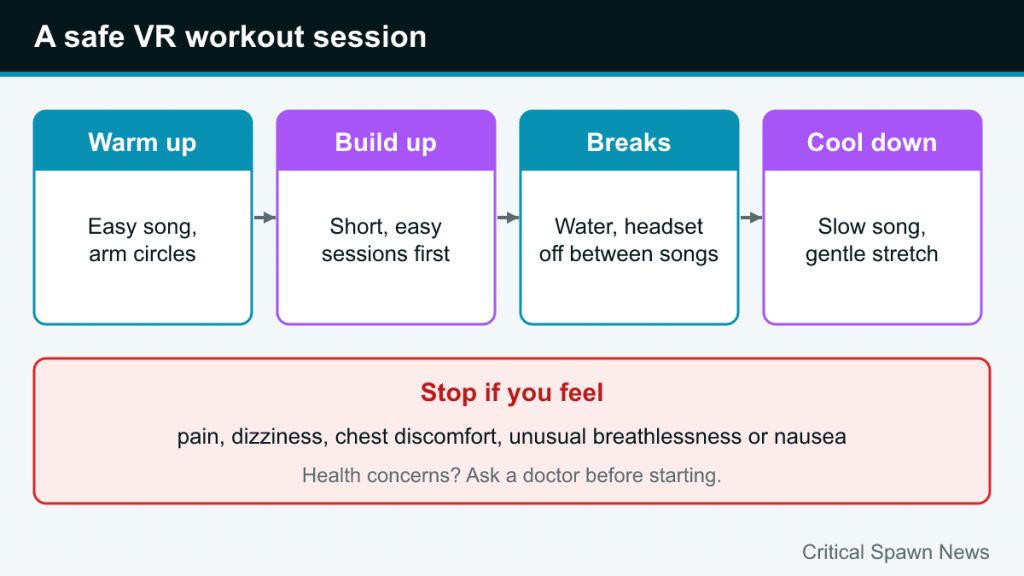
Begin with a few minutes of easy movement, such as an easy song or a game’s built-in warm-up. Gentle arm circles and shoulder rolls before you put the headset on are also common practice.
Build intensity gradually
Start with shorter sessions on easier settings and increase duration or difficulty over weeks, not days. It is tempting to play for an hour on the first night because it is fun; sore shoulders the next day are a common result.
Hydrate and take breaks
Keep water within easy reach outside your play area and remove the headset between songs or rounds to drink and cool down. Headsets trap heat around the face, so breaks are especially important.
Listen to your body
Stop if you feel pain, dizziness, chest discomfort, shortness of breath beyond normal exertion, or nausea. Motion sickness is a separate issue from exertion, but either is a reason to stop; our guide to VR motion sickness explains the difference between feeling unwell from movement in VR and normal fatigue.
Cool down
Finish with a slower song or a few minutes of easy movement, then some gentle stretching outside the headset.
For anyone with a heart condition, a recent injury, pregnancy, balance problems or other health concerns, consult a doctor or qualified professional before starting. VR does not change the basic rules of exercise safety.
Tracking Your Activity
Many people like to see their progress, but tracking on VR platforms has changed. Meta’s built-in Move tracker, which estimated activity across apps, was discontinued on March 31, 2025, and Meta did not announce a direct replacement. Tracking now mostly happens in three ways:
- In-app statistics. Dedicated fitness apps typically log workouts, streaks and estimated effort inside the app itself.
- Game scores and history. Rhythm games record scores, songs played and difficulties, which is a useful proxy for progress in skill and stamina.
- Wearables. Some fitness apps can connect to heart rate monitors or smartwatches, depending on the app and platform. Check each app’s store page for supported devices.
A word of caution on numbers: any calorie figure shown by a game or app is an estimate based on movement and the information you entered, not a precise measurement. Use estimates for trends rather than exact totals.
Common Mistakes
- Over-swinging. In rhythm games, big swings driven from the shoulder tire you quickly and can strain joints. Controlled forearm movements are usually more efficient and score just as well.
- Locking the knees. Stay light on your feet with slightly bent knees, especially in games with walls or dodging.
- Playing in a cramped space. Shortened swings to avoid furniture lead to awkward movements and accidents.
- Ignoring the headset’s weight. Long, intense sessions put load on the neck. Adjust the strap so the weight sits evenly, and keep sessions reasonable.
- Doing the same thing every day. Mixing game types, like rhythm one day and a coached class the next, works different movements and keeps it interesting.
Getting Started
If you are new, a simple approach is to pick one rhythm game you enjoy and one structured fitness app, play a short session a few times a week, and adjust from there. Comfort settings matter less in most fitness games, since you rarely move artificially through a world, but seated and standing options can help on days when you want something lighter; our guide to VR comfort settings covers those options.
The best VR fitness routine is the one you keep doing. Choose the games you look forward to, make your space safe, and let consistency do the work.