Keep Talking and Nobody Explodes and Asymmetric Party Games Explained
How Keep Talking and Nobody Explodes works, how it began as a VR game jam project, and why splitting information between players makes great party play.
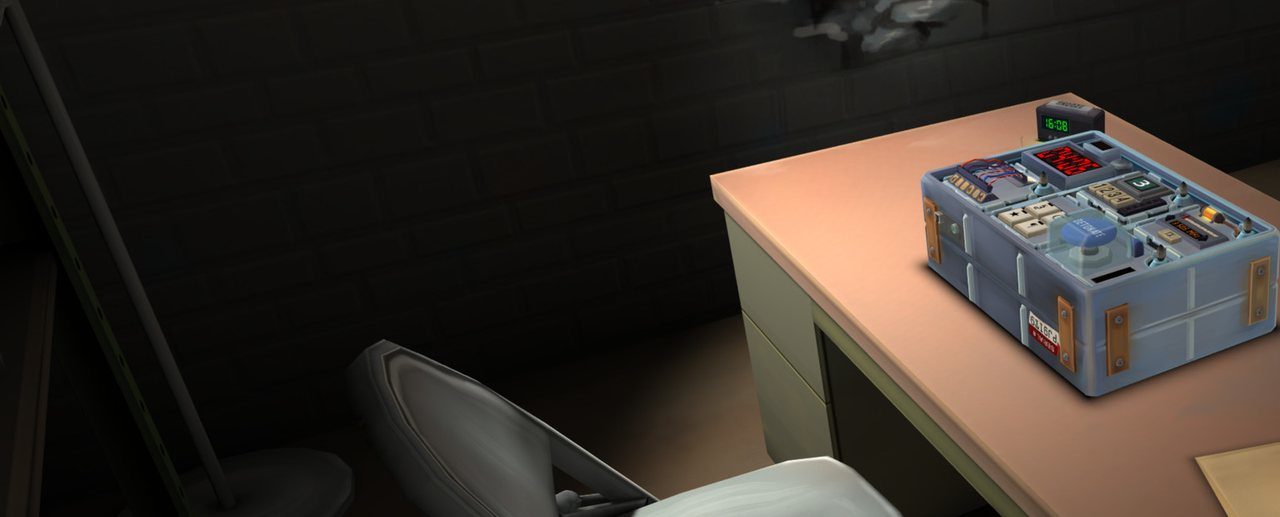
One person holds a ticking bomb they cannot understand. Everyone else holds a manual that explains how to defuse it, but they cannot see the bomb. Nobody can succeed alone, and the clock does not care how politely anyone talks. That is the whole premise of Keep Talking and Nobody Explodes, and it remains one of the cleanest examples of asymmetric design in party games. This guide explains how it works, where it came from, and why giving players different information produces some of the most memorable game nights around.
The Basic Setup
Keep Talking and Nobody Explodes, developed and published by Canadian studio Steel Crate Games, needs at least two people with two clearly separated roles:
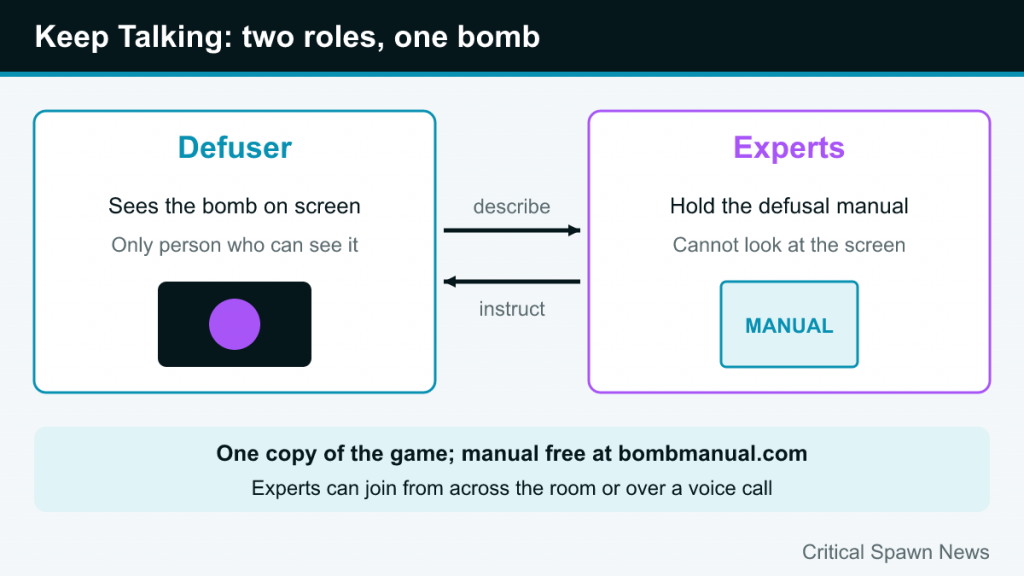
- The Defuser plays the game. They see a bomb on screen, can turn it, inspect it and interact with its parts, and they are the only person who can see it.
- The Experts have the Bomb Defusal Manual. They cannot look at the screen. Their job is to ask the right questions, find the correct section of the manual and give instructions.
Only one copy of the game is needed. The manual is free to view or print from the official bombmanual.com site, which means any number of friends can act as Experts, whether they are sitting across the room or on a voice call. The developer explicitly notes that remote play over voice chat works, which made the game a natural fit for long-distance game nights.
How a Bomb Works
Each bomb is made of several independent modules, each a self-contained puzzle. The Defuser can work on them in any order, and the bomb is defused once every regular module is solved. Every module has its own section in the manual.
Regular modules
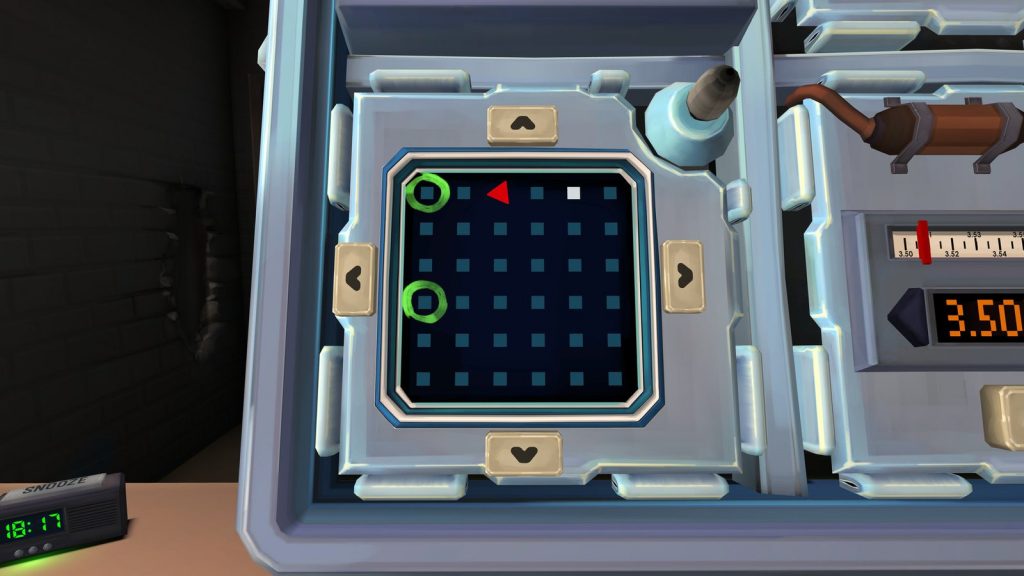
Typical modules ask the Defuser to describe something precisely so the Experts can find the matching rule. Examples include a set of colored wires where the correct wire to cut depends on how many there are, their colors and details printed elsewhere on the bomb; a big button whose correct handling depends on its color and label; mazes the Defuser cannot see the walls of; and symbol puzzles using strange glyphs that the Experts must identify from the Defuser’s descriptions.
Needy modules
Some modules are needy. They cannot be solved permanently but must be tended periodically, like a vent that needs attention before its timer runs out. They interrupt whatever the team is doing and add pressure.
Strikes and the timer
Every bomb has a countdown clock and a limit on mistakes. Wrong actions give strikes, and depending on the bomb, the timer may speed up after a strike. Run out of time or strikes and the bomb explodes, ending the attempt.
Bomb details matter
The casing of the bomb carries extra information: a serial number, batteries, labeled indicators and ports. Many manual rules depend on these details (“if the serial number ends in an odd digit…”), so experienced teams learn to read them out at the start of every round.
From VR Game Jam to Party Classic
Keep Talking began at Global Game Jam 2014, built by the team that would form Steel Crate Games using early Oculus Rift development kits. The idea came from a familiar VR problem: one person in a headset is cut off from everyone else in the room. Instead of fighting that isolation, the game turned it into the core mechanic. The headset wearer is alone with the bomb; the people around them have the knowledge.
The game launched first on Samsung Gear VR on July 16, 2015, then on Windows on October 8, 2015, where it could be played on a regular monitor. It followed on Oculus Rift in March 2016, on PlayStation VR in October 2016 and on Oculus Quest in May 2019. In August 2018, it arrived on Nintendo Switch, PS4 and Xbox One as a non-VR game, and a free update the same month removed the VR requirement on existing platforms. Non-VR iOS and Android versions followed in August 2019.
As of 2026, Steel Crate Games lists versions for Windows, macOS and Linux, Android and iOS, Meta Quest, SteamVR and Oculus Rift, PlayStation VR on PS4, and Nintendo Switch, PS4 and Xbox One. The game received multiple award nominations in 2016, including at the Independent Games Festival, the Game Developers Choice Awards and the BAFTA Games Awards.
Why VR still suits it
Played in a headset, the separation is physical: the Defuser literally cannot see the room, and the Experts cannot see the bomb. It is also a seated or stationary experience with no artificial movement, which makes it comfortable for people new to VR. That combination makes it one of the best games for including non-headset friends in a VR evening.
Why Asymmetric Information Makes Great Party Play
Most multiplayer games give every player the same information and similar abilities. Asymmetric designs deliberately break that symmetry, and the effects are especially strong in party settings.
Communication becomes the gameplay
Because no single player can see everything, the game happens in conversation. The challenge is describing a symbol nobody has a name for, or reading a confusing rule clearly under pressure. That puts people who are good with words on equal footing with people who are good with controllers.
It levels skill differences
An Expert needs no gaming experience at all: they are reading a document and asking questions. This is one reason Keep Talking works so well with mixed groups, including people who rarely play games. The Defuser’s role is not mechanically demanding either; it needs calm, clear description more than reflexes.
Everyone has a job
In many party games, spectators wait their turn. With several Experts, each can take responsibility for different sections of the manual, so everybody in the room contributes.
Mistakes are funny, not frustrating
When a bomb explodes because two people had different ideas about what “the one that looks like a backwards C” means, it becomes a story rather than a failure. Short rounds make it easy to try again immediately.
Other Asymmetric Co-op and Party Designs
Keep Talking is not the only game built on split information or split roles. Asymmetry shows up in several forms:
| Type of asymmetry | How it works | Example |
|---|---|---|
| Split information | Each player sees something the other needs | Keep Talking and Nobody Explodes |
| Split controls | Each player’s device shows instructions for someone else’s controls | Spaceteam |
| Split roles with separate views | Players with different abilities work in parallel on separate screens | Operation: Tango |
| Hidden team roles | Some players secretly work against the group | Among Us and other social deduction games |
Spaceteam
Spaceteam, released by Henry Smith’s Sleeping Beast Games on iOS and Android in December 2012, gives each player a control panel full of oddly named switches and dials, while the instructions appear on other players’ screens. The result is a room full of people shouting technobabble at each other. It shows how asymmetry can be built from very simple ingredients.
Operation: Tango
Clever Plays’ Operation: Tango, released on June 1, 2021 for PC, PlayStation and Xbox, with a Switch version in August 2024, is a two-player spy game in which one person plays a field agent and the other a hacker. Each sees different parts of the mission and must constantly talk to progress. Because each player uses their own device, it suits remote pairs more than a crowded room, and a free Friend Pass lets a second player join without buying the full game.
Hidden-role games
Social deduction games are also asymmetric, but in a different way: the asymmetry is in loyalty, not knowledge. Our explainer on social deduction games and Among Us covers that family of designs.
Tips for Your First Session
- Prepare the manual in advance. Print it or have it open on tablets or laptops before you start. Printed copies are easier to share among multiple Experts, and paper is easier to flip through quickly.
- Start with the first levels. The early bombs introduce modules gradually. Do not jump straight to bombs with many modules.
- Agree on vocabulary. Decide how you will refer to positions (“top-left,” “first from the top”) and colors before the timer starts. Ambiguity is the most common cause of explosions.
- Read the casing first. Have the Defuser read out the serial number, batteries, indicators and ports at the start. Many rules depend on them.
- Divide the manual. With multiple Experts, assign each person specific modules to master. This speeds up lookups and keeps everyone involved.
- Rotate the Defuser. Everyone should get a turn at both roles. Being the Defuser is a very different experience from reading the manual.
- Keep it kind. The pressure is part of the fun, but agree that nobody gets blamed. The best teams keep their voices calm even when the timer is flashing.
Common first-game mistakes
- The Defuser trying to guess instead of describing. Describe first, act only on instructions.
- Experts reading the entire rule aloud instead of asking targeted questions. Ask for what the rule needs, then give one instruction.
- Forgetting needy modules until they trigger a strike.
- Letting the Defuser look at the manual. It removes the point of the game.
Fitting It Into a Game Night
Keep Talking works best in a fairly quiet space where people can hear each other, and as a contrast to louder, chaotic games. A good rhythm is to slot a few bombs between faster party games, swapping the Defuser after every round so no one sits in the hot seat too long. In a VR setup, pass the headset with a fresh face cover or a wipe between players. For more on structuring an evening with multiple games and groups, our guide to planning a video game party night covers rotation and room setup.
The lasting lesson of Keep Talking is that a party game does not need complex controls or many copies to bring a room together. It needs a reason for people to talk, and a design that makes every voice matter.