Hazelight Studios Explained: A Way Out, It Takes Two, Split Fiction and the Friend’s Pass
How Hazelight Studios built a reputation on co-op-only games, from Brothers to A Way Out, It Takes Two and Split Fiction, and how the Friend's Pass works.
Most studios treat co-op as a feature: a mode added to a single-player game, or an option that lets a friend tag along. Hazelight Studios treats it as the whole point. Every game the Stockholm studio has released so far can only be played by two people together, either on one screen or online. There is no single-player mode to fall back on.
That stubbornness has produced some of the best-known co-op games of the last decade, including a Game of the Year winner. This profile looks at where Hazelight came from, what defines its design, and how its Friend’s Pass system lets a second player join without buying the game.
Origins: Josef Fares and Brothers
Hazelight’s story starts with its founder and creative director, Josef Fares, a Lebanese-born Swedish filmmaker who moved into games. His first game project was Brothers: A Tale of Two Sons, released in 2013 and developed at Starbreeze Studios.

Brothers is technically a single-player game, but its central idea pointed directly toward Hazelight’s future. The player controls two brothers at once, one with each half of the controller: the left stick and trigger move the older brother, the right stick and trigger move the younger. Puzzles require coordinating both characters, and the control scheme becomes part of the story’s emotional payoff. It was a game about two people cooperating, played by one person. The obvious next step was to give each character to a different player.
Fares founded Hazelight in 2014, and much of the core team behind Brothers joined the new studio. Its games have since been published by Electronic Arts, starting under the EA Originals label.
A Way Out (2018): co-op as the only option
A Way Out, released in March 2018, was Hazelight’s first game and the first statement of its philosophy. Two players control Leo and Vincent, two prisoners who meet inside and plan an escape, then continue a story on the outside. The game is a cinematic crime drama, and it can only be played cooperatively.
Several design choices introduced here became Hazelight signatures:
- Mandatory split-screen. Even when playing online, both players see a split screen showing both characters. You always see what your partner is doing, which lets the game run two stories in parallel and lets players react to each other’s moments.
- Dynamic splitting. The divide between the two views is not fixed. It can shift, resize or merge when one character’s scene becomes more important, much like film editing.
- Different perspectives. The two characters often approach the same situation in different ways, and the game sometimes asks players to choose between their plans.
- A shared ending. The story is built around both players experiencing it together.
A Way Out was also where the Friend’s Pass idea made its debut: one player bought the game, and a friend could download a free trial version that allowed them to play the whole game online with the owner. For a co-op-only game, removing the requirement for two purchases was a natural fit.
It Takes Two (2021): the breakthrough
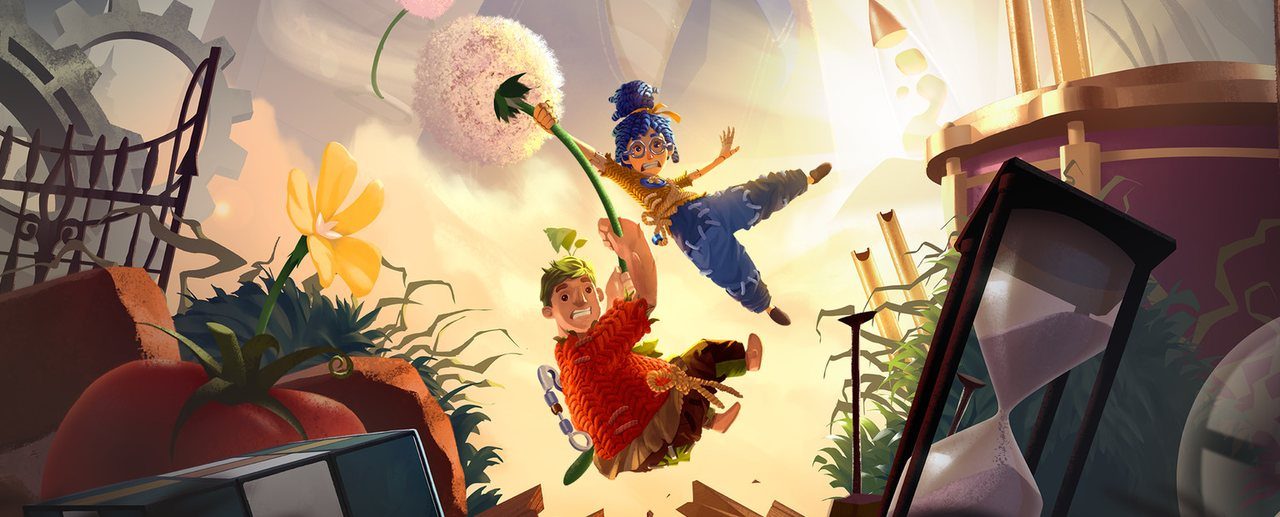
It Takes Two, released in March 2021, took Hazelight from a cult studio to a household name in co-op gaming. Two players control Cody and May, a married couple on the verge of divorce who are magically transformed into small dolls and must work together to find their way back. The adventure moves through a series of wildly different worlds based on parts of their house and life.
The game’s defining trick is constant variety. Each chapter gives the two characters new, complementary abilities: one player might have a hammer while the other has nails that the hammer can swing from, or one controls time while the other can clone themselves. Mechanics rarely outstay their welcome, and many appear only for a single level or minigame. The result plays like a tour through many genres, all built around two players depending on each other.
The critical response was exceptional. At The Game Awards 2021, It Takes Two won Game of the Year, along with Best Family Game and Best Multiplayer Game. It also won Game of the Year and Outstanding Achievement in Game Design at the D.I.C.E. Awards. A co-op-only game winning the top award at the biggest industry show was a notable moment for the genre. An Amazon film adaptation was announced in 2022.
Split Fiction (2025): science fiction meets fantasy
Split Fiction, released on March 6, 2025, follows Mio and Zoe, two writers, one of science fiction and one of fantasy, who become trapped inside a simulation built from their own stories. The game alternates between sci-fi and fantasy worlds, again with constantly changing abilities, and includes short optional side stories that riff on different game genres.
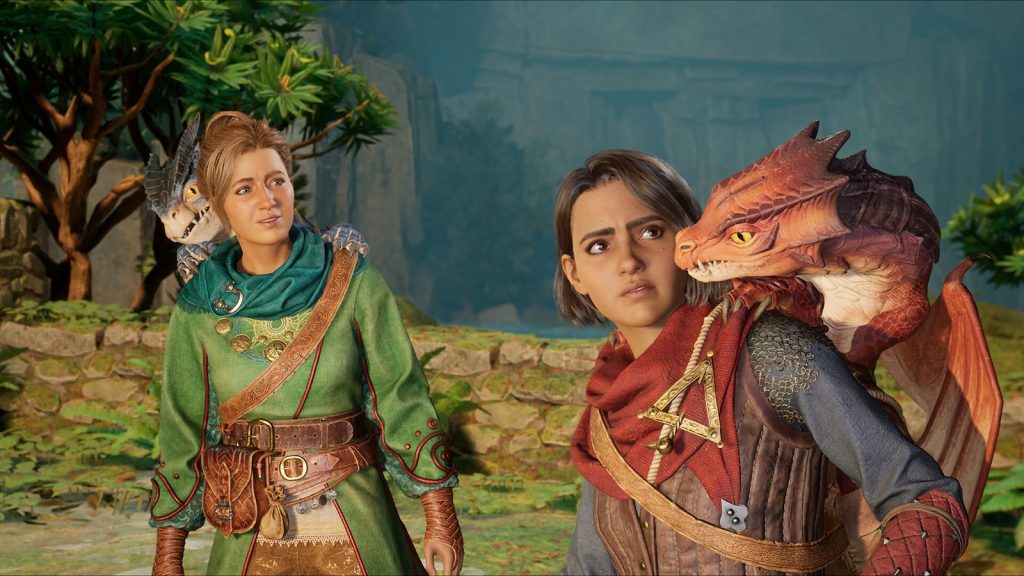
It launched on PC, PlayStation 5 and Xbox Series X|S, and followed on Nintendo Switch 2 on June 5, 2025. Like its predecessors, it requires two players, either in local split-screen or online. A film adaptation was also announced in 2025.
The Friend’s Pass, explained
The Friend’s Pass is the practical feature that makes Hazelight’s co-op-only approach work for online play. The idea is the same across all three games: one player owns the full game, and a friend downloads the free Friend’s Pass to play with them online. The details have changed over time, especially around crossplay.
| Game | Friend’s Pass basics | Crossplay with Friend’s Pass |
|---|---|---|
| A Way Out (2018) | Free trial lets a friend play online with an owner | No; same platform |
| It Takes Two (2021) | Free Friend’s Pass lets a friend join an owner online | No cross-platform play; cross-generation within a family (e.g., PS4 with PS5, Xbox One with Xbox Series) |
| Split Fiction (2025) | Free Friend’s Pass on all of the game’s platforms | Yes, across PC, PS5, Xbox Series X|S and Switch 2 with an EA Account |
Split Fiction’s rules in detail
According to EA’s official pages, for Split Fiction:
- The Friend’s Pass is available on every platform where the game is sold.
- A Friend’s Pass holder can play the full game only when in an online session with someone who owns the full game.
- Two Friend’s Pass holders can try the early part of the game together, but not the whole adventure.
- Crossplay requires an EA Account, and players need to be signed in to receive cross-platform invites.
- On consoles, both players need the platform’s online subscription (PlayStation Plus or Xbox Game Pass) to play online.
Because platform policies can change, check EA’s official Friend’s Pass page for your system before you plan a session.
What defines Hazelight’s design
Across its games, a few principles stand out:
- Two-player only. Every game is built around exactly two players, never one, never four. This lets every scene be designed for a specific pairing.
- Interdependence, not duplication. The characters usually have different abilities that only work in combination, so neither player can carry the other through every puzzle.
- Split-screen always. Even online, both players see both views. It encourages communication and shared reactions, and it lets the game direct attention cinematically.
- Relentless variety. Rather than deepening one mechanic over many hours, the games constantly introduce new ones.
- Story about relationships. Each game is about two people learning to work together: prisoners, a couple, two writers. The theme mirrors what the players are doing.
These principles also explain some criticisms. Players who prefer deep, mastered systems may find the constant switching shallow, and the strict two-player format means groups of three or four need to look elsewhere. For pairs, though, there are few studios more focused on their needs. If you are deciding what to play with a partner or friend, our guide to choosing couch co-op games covers how these games fit alongside other options.
How to play Hazelight games today
- Same sofa: all three games support local split-screen with two controllers on one system. Only one copy is needed.
- Online, same platform: the owner invites a friend who has downloaded the Friend’s Pass.
- Online, different platforms: currently only Split Fiction supports crossplay, through EA Accounts.
- On PC via Steam: It Takes Two also lists Steam Remote Play Together support on its Steam page, which streams the local game to a friend.
For a refresher on what terms like split-screen, crossplay and Remote Play Together mean on store pages, see our multiplayer terms explainer.
Tips for a first Hazelight playthrough
- Talk constantly. The games are designed around communication. Describing what you see on your half of the screen solves most puzzles faster.
- Pick characters thoughtfully. Abilities differ by character, and some sections are more demanding for one of them. If one player is less experienced, it can help to look at which character tends to have the more forgiving role in the opening chapters.
- Do not skip the side content. Minigames and optional stories are a large part of the charm.
- Plan for several evenings. These are full-length campaigns, best enjoyed in multiple sessions with the same partner.
Which Hazelight game to start with
All three games stand alone, so there is no need to play them in order. The best starting point depends on the pair:
- A couple or close friends who want a varied, light-hearted adventure: It Takes Two. Its playful tone, colorful worlds and constantly changing mechanics make it the most widely recommended entry point.
- Players on different platforms: Split Fiction, the only one of the three that supports crossplay through EA Accounts.
- Fans of crime films and grounded stories: A Way Out. It is shorter and more cinematic, with a stronger focus on narrative than on platforming variety.
- A solo player curious about the studio’s roots: Brothers: A Tale of Two Sons, the single-player game in which one person controls two characters. It is not a Hazelight release, but it shows where the ideas began.
Whichever you choose, agree beforehand on how often you can play. Because these games cannot be continued alone, a campaign stalls if one partner’s schedule disappears, and it is far more satisfying to finish the story together than to leave it half done.